

By Muhammad Ma’ruf, Director, Global Thinkers Institute (GTI)
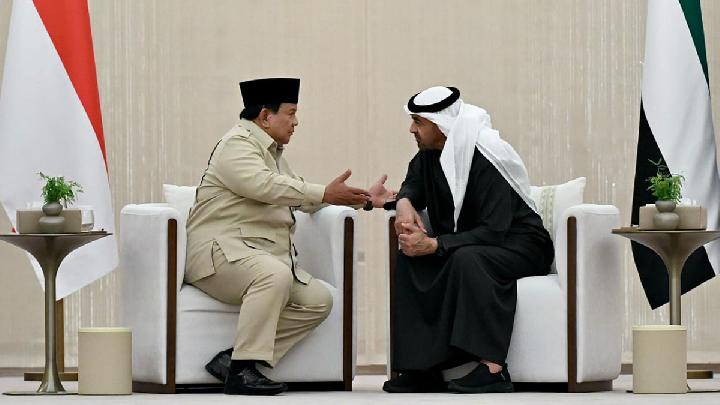
GTI-When President Prabowo Subianto decided to fly to Doha just 72 hours after the Israeli attack on Qatar, Indonesia could be said to be implementing "smart power diplomacy"—a combination of soft and hard power. The unannounced visit on September 12, 2025, was not merely a diplomatic gesture, but rather a representation of a fundamental transformation in Indonesia's international relations paradigm.
This visit reflected Indonesia's response to the changing distribution of global power. Israel's attack on Qatar—the first time it violated the sovereignty of a strategic ally of the United States—marked an inflection point in the Middle East geopolitical order. Prabowo seized this momentum to position Indonesia as a balancing force in the Global South architecture.
This transformation occurred amid what Graham Allison, in Destined for War, calls the "Thucydides Trap," when a rising power challenges the hegemony of an established power. Indonesia, as the world's 16th-largest economy with a GDP of US$1.4 trillion and a population of 275 million, is now seeking to position itself not as a reactive middle power but as a proactive leading power in the Global South.
Israeli Attack: Disruption of the Westphalian Order
Israel's attack on Doha using 15 F-35 Lightning II fighter jets on September 9, 2025, constituted a fundamental violation of the Westphalian principle of sovereignty, which has been the foundation of the international system since 1648. This attack demonstrated the erosion of international norms that have long been the basis of the legitimacy of the global order.
The target of the attack was the Hamas political office in the Leqtaifiya district, killing five Hamas members, including the son of Khalil al-Hayya, Hamas's chief negotiator for Gaza. Strategically, this attack destroyed the mediation mechanism that had facilitated two previous ceasefires—November 2023 and February 2025. This was because Qatar had been the primary mediator between Hamas, Israel, and the United States.
The global reaction reflected an increasingly polarized world. Despite Qatar hosting the Al-Udeid base with 10,000 US military personnel, the US has offered only a minimal diplomatic response. President Donald Trump has expressed his "disappointment" but insisted that the decision rests solely with Netanyahu. Europe, meanwhile, has not responded decisively.
In contrast, countries in the Global South have responded far more forcefully. Turkey has threatened to sever diplomatic ties with Israel. Iran has offered military support to Qatar. Indonesia, through Prabowo's visit, has provided high-level political support. This pattern of responses confirms the rise of non-Western powers challenging Atlantic hegemony.
The Gulf States' Strategic Dilemma: Between Alliances and Identity
Gulf states indeed face a dilemma—a tension between alliance commitments and national interests. Qatar, with a US$475 billion sovereign wealth fund through the Qatar Investment Authority, has complex economic interdependencies with both the West and the Muslim world.
Economic data demonstrates the complexity of these relationships. Qatar exports 77 million tons of LNG annually, with 25% of that going to Asia, 20% to Europe, and 15% to North America. The country is also a global investment hub with assets in 40 countries, including US$40 billion in the United States and US$35 billion in Europe. However, 60% of Qatar's population is Muslim expatriates, and 85% of Qataris support Palestine, according to the Arab Barometer 2024 survey.
Saudi Arabia faces a similar dilemma, but on a larger scale. The kingdom has 267 billion barrels of oil reserves (17% of the world's total) and a US$620 billion sovereign wealth fund through the Public Investment Fund. Normalization with Israel through the Abraham Accords provided access to technology and investment worth US$20 billion, but faced significant domestic resistance.
The UAE, with a US$507 billion economy and a position as a regional financial hub, successfully balanced its relationship with Israel (bilateral trade of US$2.5 billion by 2024) while maintaining rhetorical support for Palestine. The UAE's model of "pragmatic engagement" served as a model for other Gulf states in managing this strategic dilemma.
Moment of Solidarity: Institutionalizing a Collective Response
However, the Israeli attack appeared to change things. Qatar responded by activating multilateral diplomatic mechanisms through an emergency meeting of Arab and Islamic foreign ministers on September 14-15, 2025. Qatar sought to create a "focal point" for coordinating a collective response.
This meeting involved the 57 member states of the Organization of Islamic Cooperation (OIC), with a total population of 1.8 billion and a combined GDP of US$24 trillion. The main agenda encompassed three pillars: (1) formal condemnation of Qatar's violations of sovereignty, (2) coordination of economic sanctions against Israel, and (3) strengthening Arab-Islamic solidarity mechanisms.
The resulting "Doha Declaration" included concrete commitments: the establishment of a US$10 billion solidarity fund for Gaza reconstruction, coordination of a boycott of Israeli products in the 57 OIC member states, and the establishment of an international investigative commission into the attack on Qatar. More strategically, the declaration envisaged an automatic response mechanism for attacks on OIC member states.
The timing of the meeting, which took place after Prabowo's visit, created strong diplomatic synergy. Indonesia, as a non-Arab country with the world's largest Muslim population, lent global legitimacy to the Arab-Islamic agenda. Prabowo's presence also demonstrated that this issue transcends regional boundaries and concerns the Global South as a whole.