
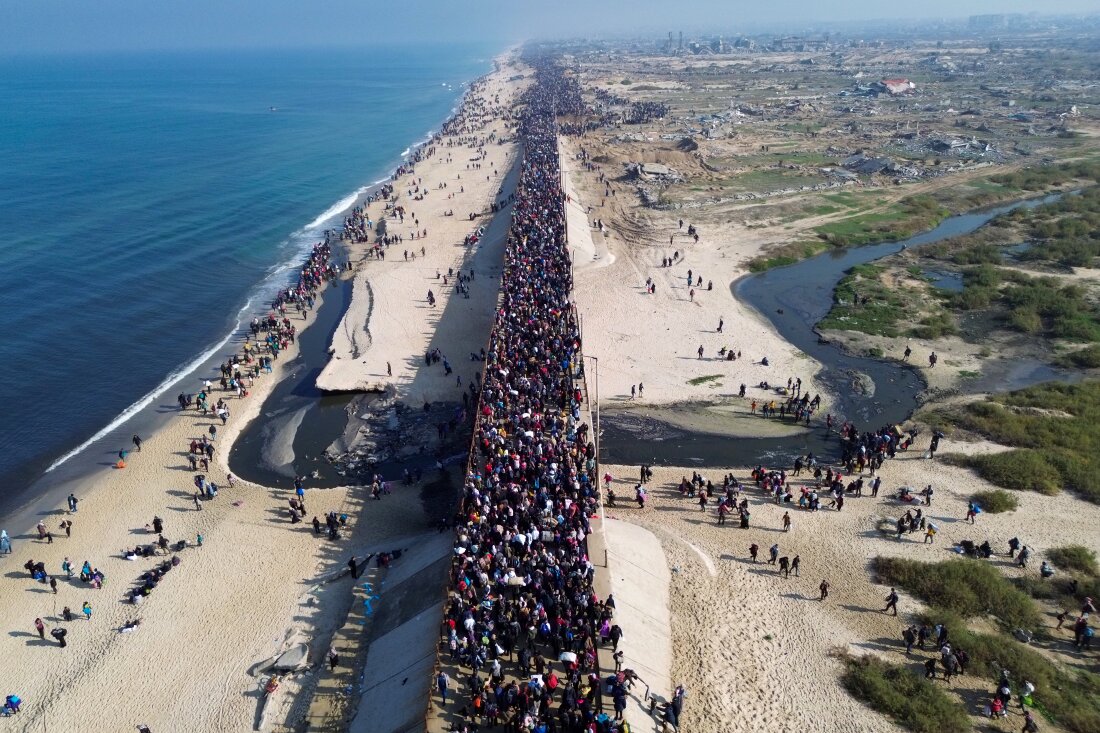

The ceasefire that ended 471 days of carnage in Gaza arrived not as a triumph of diplomacy, but as an admission of failure—a failure of military strategy, moral accountability, and international leadership. For over a year, Israel’s bombardment of Gaza unfolded with a brutality that shocked the world: neighborhoods flattened, hospitals reduced to rubble, and a death toll surpassing 46,000 Palestinians, a third of them children. Yet when the guns fell silent in 19 January 2025, Israel stood isolated, Hamas remained unbroken, and Gaza’s survivors faced the Sisyphean task of rebuilding lives from ashes. This war, framed by Israel as a campaign to “destroy Hamas” and restore deterrence, instead exposed the limits of raw power and the perils of unchecked impunity.
The Anatomy of a Prolonged Catastrophe
The roots of the ceasefire lie in a war that spiraled beyond control. Launched in response to Hamas October 7 attack, Israel’s retaliation quickly devolved into a campaign of collective punishment. Prime Minister Benjamin Netanyahu, embroiled in corruption scandals and reliant on far-right coalition partners, weaponized the conflict to evade accountability for his government’s security failures. As Daniel Levy, a former Israeli peace negotiator, noted, Netanyahu’s survival depended on perpetuating the myth of a “wartime leader” defending his people. Yet this narrative unraveled as the months dragged on.
The Israeli public, initially united by outrage, grew disillusioned. Families of hostages held in Gaza staged mass protests, demanding a deal for their loved ones. Meanwhile, Hamas defied expectations of collapse. Its fighters adapted to urban warfare, replenished ranks, and even escorted freed hostages through crowds in televised displays of defiance—a stark contrast to Israel’s claims of “degrading” the group. By mid-2024, the Israeli military admitted privately what critics had long argued: Hamas could not be eradicated by force[1].
Internationally, the war became a litmus test for a crumbling world order. The International Court of Justice’s provisional ruling labeling Israel’s actions a “plausible genocide” marked a historic rebuke. Yet Western powers, led by the U.S., doubled down on unconditional support. Weapons shipments flowed even as Gaza starved. The Biden administration, torn between private frustration and political timidity, enabled Netanyahu’s intransigence—a dynamic Levy termed “incompetence layered over complicity.”
The Ceasefire: A Product of Exhaustion, Not Strategy
The truce emerged not from a coherent plan, but from intersecting pressures. Domestically, Netanyahu faced a breaking point: hostage families’ protests eroded his credibility, while far-right ministers threatened to topple his government if attacks ceased. The prime minister gambled that a pause might buy time to regroup, but his coalition’s survival now hinges on a Faustian bargain—resume the war or risk political oblivion.
Globally, the specter of Donald Trump’s return to the White House loomed large. While Trump’s pro-Israel fervor is unwavering, his transactional unpredictability left Netanyahu wary. Would Trump greenlight a Rafah invasion? Or prioritize U.S. economic interests over regional chaos? The uncertainty hastened Netanyahu’s acquiescence to a deal.
Meanwhile, Hamas leveraged its survival. Despite catastrophic losses, the group retained enough cohesion to negotiate from a position of symbolic strength. Its fighters’ visibility during hostage releases—uniformed and armed—underscored a central paradox: Israel’s military might had shattered Gaza but not Hamas’ political hold.
The Aftermath: A Landscape of Ruin and Reckoning
The ceasefire leaves Gaza in ruins and Israel adrift. For Palestinians, the toll is incalculable: generations traumatized, universities erased, and a health system in collapse. Reconstruction will require billions, yet Israel’s blockade persists, and aid remains politicized. As families sift through debris for belongings, the question lingers: can Gaza rebuild when the siege—and the threat of renewed bombing—remains?
In Israel, the war’s legacy is a crisis of identity. The myth of invincibility, cultivated since 1948, lies fractured. The military failed to protect citizens on October 7; the government failed to rescue hostages without a ceasefire. Far-right factions, emboldened by Netanyahu’s concessions, now demand greater control over security policy, while the public grapples with a haunting realization: military dominance cannot guarantee safety.
Internationally, the war accelerated a seismic shift. The Global South, drawing parallels to its own colonial past, rallied behind Palestine, isolating Israel in forums like the UN. Even Arab states tied to Israel through the Abraham Accords distanced themselves, wary of public fury. Meanwhile, the West’s moral authority eroded further as it shielded Israel from accountability—a hypocrisy laid bare when the same nations that invoked international law over Ukraine dismissed its relevance in Gaza.
The Road Ahead: Between Fragility and Opportunity
The ceasefire is a pause, not an endpoint. Netanyahu’s government, clinging to power, may restart hostilities to appease far-right allies. Hamas, though battered, will seek to consolidate governance amid the rubble. For the U.S., the challenge is existential: Will Trump’s “America First” mantra mean uncritical support for Israel, or will economic pragmatism—avoiding inflation sparked by regional wars—temper his stance?
Yet within the fragility lies a glimmer of hope. The war has galvanized a global solidarity movement unmatched in scale, driven by Palestinian journalists like Bisan Owda and Motaz Azaiza, who documented Gaza’s suffering in real time. Their voices, amplified on platforms like TikTok, reshaped public consciousness and exposed Western media’s failures. Legal battles at the ICC and ICJ, though slow, keep alive the possibility of accountability.
Ultimately, the path forward demands confronting uncomfortable truths. As Levy argues, Israel’s security cannot be built on Palestinian subjugation. Hamas’ resilience proves resistance thrives under oppression. And the international community, having enabled this catastrophe, must choose: Will it perpetuate cycles of violence, or finally champion a political solution grounded in justice?
The Gaza ceasefire is a testament to resilience—of Palestinians enduring unimaginable loss, of Israelis challenging their government’s failures, and of a world increasingly unwilling to look away. Whether this moment becomes a turning point, however, depends on one unresolved question: Can humanity learn that security forged through domination is no security at all?
Conclusion
The Gaza ceasefire is less a resolution than a temporary pause in a decades-long cycle of violence. Israel’s failure to achieve strategic goals, coupled with its moral and legal isolation, signals a turning point. However, without addressing root causes—occupation, apartheid, and Palestinian self-determination—the region remains a tinderbox.
[1] Christian Edwards, & Tamar Michaelis. (2024, June 21). Israeli military official says Hamas cannot be destroyed, as rift with Netanyahu widens. cnn.com. Retrieved January 31, 2025, from https://edition.cnn.com/2024/06/20/middleeast/hagari-netanyahu-destroy-hamas-israel-intl/index.html.